










Five years ago, Moore Intelligence revealed the Inconvenient Truth that targets to decarbonise the global economy were likely to be missed. Our new analysis finds a business environment that is becoming more volatile and vulnerable to unforeseen risks.
Even with the combined might of Artificial Intelligence and the brightest human minds, the technologies and infrastructure needed to replace fossil fuels and meet ambitious global climate change targets, are still not fully developed or deployed on the scale required.
The businesses impacted most are often the ambitious mid-market companies that are the engine of the global economy. They find themselves second-guessing regulation and are confused about where to invest to ensure their long-term survival and growth.
However, upheaval presents opportunities and away from the international conference tables dominated by politicians, innovative businesses are finding new, sustainable ways to move ahead.
From environmental values to value-based action
There has been a marked shift in business thinking on sustainability. High level public positioning on ESG (environmental, social and governance) values has been overtaken by a hard-headed commercial approach, linking sustainability directly to value creation and risk management to create competitive advantage.
Talk of a wholesale retreat or reversal on ESG is off the mark – it is more about reframing and refocus. A study of 75 global companies by Harvard Business Review shows that only 13% had backtracked on sustainability, with the majority staying the course, or quietly doubling down.
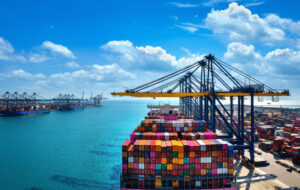
Sustainability concerns around supply chains, shipping routes and the flow of energy and raw materials have prompted diverse responses. These include renegotiating contracts and funding or relocating operations in response to international conflicts and trade disputes.
This is redrawing the global business map. There is more emphasis on ‘nearshoring’ and ‘friendshoring’ of production or distribution facilities closer to more ‘aligned’ nations to minimise risk of business interruption.
This is often done to realise cost savings and operational efficiencies but the upheaval has also created new partnership opportunities for companies of all sizes in the supply chain.
Falling behind on climate change
While climate change is not the only aspect of sustainability, it has ramifications for every business from energy and raw material supply to input costs.
A report by the World Resources Institute (WRI) assessing progress on critical issues, including clean energy adoption, is a sobering read.
It reported that not one of 45 key indicators of climate action is on track to hit 2030 targets, and although the majority are heading in the right direction, some are going the wrong way. Overall, the pace and scale of progress is inadequate.
On a positive note, global share of electricity from solar and wind has more than tripled since 2015, with spending on clean energy exceeding fossil fuel investment for the second consecutive year in 2024.
Solar accounts for almost 80% of the global increase, followed by wind, hydro power, bioenergy and geothermal. China is now investing more in renewable energy than the rest of the world combined.
The International Energy Agency (IEA) forecasts that global renewables capacity will more than double by 2030, increasing by 4,600 gigawatts. That is the equivalent of adding China, the European Union and Japan’s power generation capacity combined to the global energy mix.
Tough challenges to get on track
The World Resources Institute estimates that getting on track to meet climate change targets by 2030 requires a number of actions, including phasing out coal more than ten times faster. That equates to retiring nearly 360 average-sized coal-fired power plants.
It also means expanding rapid transit networks five times faster — that equates to building at least 1,400 km (870 miles) of light rail, metro and bus lanes annually.
Transport is a major challenge generally. While global electric vehicle (EV) sales reached 20.7 million units in 2025, up 20% year-on-year, there are major differences in EV adoption.
Electrification and decarbonisation challenges are manifold – particularly in heavy industries, notably steel and cement. Although technological innovations are being introduced in manufacturing methods, they remain major contributors to greenhouse gas emissions.
Fuelling the future
A complicating factor highlighted by consultancy McKinsey is that despite major investment in renewables, oil, gas and coal will continue to dominate the world’s energy mix well beyond 2050.
That means continued investment in fossil fuel exploration and production is vital, which explains why leading energy companies are putting money into fossil fuels and renewables simultaneously.
The reality is that soaring electricity demand is outpacing a transition to renewables. As the IEA notes, renewables face increasing challenges including grid integration, supply chain vulnerabilities, financial pressures and policy shifts. Meanwhile, McKinsey says that natural gas could see the strongest demand increase among fossil fuels, while coal requirements may also persist at higher levels than anticipated.
Consequently, polarised thinking on energy sources needs to give way to a more joined-up and pragmatic approach to maintaining a diverse energy mix which safeguards supplies and energy price affordability.
Mining: “time to sound the alarm”
Strategic metals and rare earth minerals hold the key to electrification, particularly copper and lithium which are essential for almost all electrification technologies.
Collectively, copper, lithium, nickel, cobalt and graphite represent the most critical raw materials needed for everything from electric vehicle batteries to solar panels and wind turbines to communication networks.
The supply/demand balance is already under pressure, exacerbated by the fact that production is concentrated in just a few geographies. China processes more than 70% of the top 20 minerals needed for energy purposes, although Greenland also has important undeveloped resources.
Mining giant BHP forecasts demand for copper alone will rise by 70% by 2050, which requires major investment in current mines and in developing new areas.
Demand growth estimates for individual metals and minerals vary but for the principal ones, demand is set to outstrip supply.
In the case of copper, the IEA calculated that supplies will fall 30% short of demand as soon as 2035 unless action is taken and concluded: “It is time to sound the alarm.”
Offsetting this gloom, however, are major advances in developing green fuels from hydrogen to ammonia and small-scale nuclear reactors.
AI and the bottom line
Rising use of Artificial Intelligence (AI) by business is a key difference between today and five years ago.
McKinsey found that 88% of companies globally now use AI in at least one business function and it is achieving critical mass as a business tool faster than preceding disruptive technologies such as the Internet or smartphone.
Chat GPT, the AI chatbot launched by OpenAI in 2022, has gained users faster than almost any other software application in history. It is now the world’s most widely used AI chatbot with 800 million weekly users, or nearly 10% of the world’s population.
Although the range of AI business tools is growing, most companies are at an early stage of scaling the technology and generating enterprise-level value. The majority describe improved innovation as a key benefit, while nearly half report improved customer satisfaction and competitive differentiation.
The greatest revenue benefits flow from deployment in marketing and sales, strategy and corporate finance and product or service development.
A core consideration, especially for cost-conscious mid-market companies, is the expected return on investment (RoI) and timeframe for payback.
International Data Corporation (IDC) research found that organisations that implemented a strategic approach to AI integration realised RoI of $3.70 for every $1 spent, mainly higher growth and productivity. For some, the return was as high as 10.3x the amount spent.
However, AI is not a surefire way to boost profitability. A study by MIT found that just 5% of AI pilot programmes achieve rapid revenue acceleration, while the vast majority stall and deliver little or no measurable bottom line benefit.
Why? Poor purchasing decisions, lack of leadership and insufficient resource allocation can all contribute to flawed implementation.
Trying to go it alone is another risk factor. MIT found that purchasing AI tools from specialist vendors and building partnerships works about 67% of the time, compared to internal AI builds which succeed only one-third as often.
AI can be viewed as a double-edged sword from a sustainability and energy standpoint. Its supercomputing powers have the potential to help companies develop less energy-intensive ways of working, but AI-driven data centres themselves devour huge amounts of electricity and water.
Already, a single hyperscale data centre can consume as much electricity annually as 100,000 homes and they are getting bigger and more energy intensive.
According to the International Energy Agency, data centres consumed around 415 terawatt-hours globally in 2024, largely driven by AI activity. This is estimated to more than double by 2030, which would amount to more than Japan’s current annual electricity consumption.
Funders double down on risk and reward
Access to capital is the lifeblood of companies pursuing ambitious growth so it is vital that business leaders can convince investors that their operations are sustainable.
However, views on what constitutes a sustainable business and an attractive investment diverge, depending on investment focus and type of investor. Understanding agendas of investors is important for companies pitching for a share of the $2.5 trillion ‘dry powder’ controlled by private equity (PE) firms.
Industry experts report that private equity has moved away from broad ESG narratives towards factors such as governance likely to have a measurable impact on cash flow, risk and exit value.
Appraisal of ESG factors still features in due diligence but is viewed through the prism of risk: reputational, financial and regulatory.
Capital is flowing ever faster to new opportunities in search of the best return. In 2025 this resulted in record flows from venture and private equity funds into the Middle East, where some of the world’s biggest sovereign wealth funds are based.
Relatively new magnets for investment include offshore deepwater oil and gas exploration projects in the Guyana-Suriname Basin in South America. This is linked to increasing concerns over security and diversity of fossil fuels as conflicts and political upheaval interrupt or threaten supplies from major oil and gas nations such as Russia and Venezuela.
For companies seeking private equity funding, pitches should be focused on verifiable data rather than high level principles, with a clear emphasis on business growth, value creation and risk mitigation.
Supply chain accountability intensifies
Small and mid-market businesses have historically been exempt from regulations compelling large corporates to make detailed disclosures on the environmental impact of their operations.
But change is underway and companies supplying goods or services to large corporations will increasingly be caught in the regulatory dragnet by default.
While a business may be too small in terms of its own employees or turnover to meet the threshold for regulatory disclosure, the big companies they work for will be obliged to report to regulators on the carbon emissions of their whole supply chain.
This will only be possible if suppliers can measure and report data, adding complexity and cost if systems and resources are not yet in place.
It stems from a progressive expansion in regulatory focus to encompass mandatory reporting by big companies of so-called Scope 3 data. This covers indirect carbon emissions across a company’s entire value chain, including suppliers, transport and product use.
It may not seem momentous but Scope 3 makes up the majority of a company’s total greenhouse gas footprint — generally about 75%, though it can be as high as 90%.
The implementation timetable for compulsory Scope 3 reporting varies across jurisdictions, with phased introduction in the UK from 2026. In the European Union, the first wave of reporting has already begun under the Corporate Sustainability Reporting Directive, with a second phase scheduled for 2027/28.
In the US, Scope 3 reporting is not mandatory under federal law although some individual states, like California, request it from large companies. In Asia and in the Middle East Scope 3 is mostly voluntary, although stakeholder pressure is pushing many firms into disclosure.
While no regulator has worldwide powers, the International Sustainability Standards Board (ISSB) is becoming a global baseline for mandatory climate-related reporting in many jurisdictions. Mid-sized and smaller companies may gain competitive advantage and mitigate commercial risk by beginning emissions data reporting now rather than being backed into a corner by external factors.
Building design raises bar on net zero
The buildings in which we live, work, rest and play are energy-hungry and generate large amounts of carbon. Buildings and infrastructure account for 40% of greenhouse gas emissions, both from construction and operations such as lighting and air conditioning.
Owners and developers, such as hotel chains and real estate investors, are under increasing pressure from stakeholders to be transparent about their entire supply chain. This creates opportunities for mid-market companies to become suppliers of choice by demonstrating an ability to measure and mitigate their own carbon impact.
In the absence of a single global net-zero building regulatory body, change is piecemeal. However, the World Green Building Council has pledged to reach net-zero carbon operational emissions in building portfolios by 2030 and advocate for net-zero buildings by 2050.
Innovations are emerging in net zero building design and retrofitting existing structures. South Korea set a new standard in sustainable architecture with EnergyX DY-Building, the world’s first certified plus zero energy building which generates more energy than it consumes. Energy X utilised AI-driven energy optimisation and is expanding into the Middle East.
The global hotel sector is also reducing its carbon footprint. Hilton Group retrofitted Hotel Marcel in Newhaven, Connecticut, transforming it from a 1970s brutalist concrete headquarters for a major tyre manufacturer, into the first net zero hotel in the US. Meanwhile, Radisson Hotels has several independently verified net zero hotels, operating entirely on green energy, with low-carbon menus and minimal waste.
Clearly there is a long way to go for such innovations to become commonplace. Progress also requires decarbonising heavy industries involved in construction: steel and cement each account for between 7% and 8% of total energy system carbon emissions.
An increased percentage of global steel output is now produced using electric arc furnaces instead of fossil fuel-based production, while the cement and concrete industries are pursuing carbon capture and storage.
Conclusion
It takes significant skills and knowledge to lead a truly sustainable company in today’s volatile business environment.
It poses particular challenges for companies occupying the ‘squeezed middle’. They have the ambition and opportunity to grow in international markets but possess leaner leadership teams, fewer risk management resources and more limited lobbying power than global corporates.
We have focused here on some inconvenient truths about the net zero agenda. However, the fundamental and enduring truth is that an ability to generate a profit and invest in the future is vital for transition to a sustainable economy that benefits companies, society and the planet.