








Africa’s energy investment outlook
Africa’s upstream oil and gas sector is expected to reach USD 41 billion in capital expenditure in 2026, up modestly from USD 40 billion in 2025. This increase comes as global exploration and production spending continues to recover, with total investment trending towards USD 504 billion.
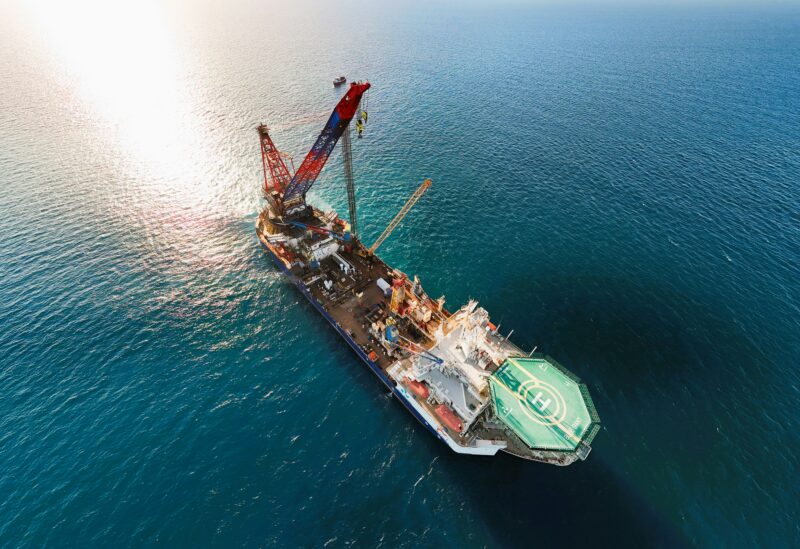
Offshore activity is driving much of that momentum. Offshore spend across Africa is forecast at USD 19 billion in 2026, growing at an average annual rate of 6.6% and expected to approach USD 54 billion by 2030. Deepwater developments account for the majority of this growth.
Four forces sit behind the current investment cycle:
- World‑class deepwater discoveries in Namibia and Tanzania
- A renewed wave of competitive licensing rounds across the continent
- Legislative reforms in Nigeria and Angola that have materially improved investor returns
- Europe’s legally binding phase‑out of Russian gas, which is redirecting LNG procurement towards African producers
The closure of the Strait of Hormuz in early March 2026 amplified each of these factors, particularly the last. With Qatari supply to Europe disrupted and US LNG terminals operating close to capacity, African LNG has shifted from being one of several diversification options to a near‑term procurement priority.
Nigeria and Angola: Africa’s top upstream destinations
Nigeria and Angola continue to attract the largest share of new upstream capital. In both cases, sustained regulatory reform has been central to the recovery in investor confidence.
Nigeria’s Petroleum Industry Act has catalysed more than USD 17 billion in foreign direct investment since its introduction. The 2025 licensing round is targeting technically capable operators, with signature bonuses ranging from USD 3 million to USD 7 million and an estimated USD 10 billion of new investment expected over the next decade.
Shell’s Final Investment Decision on the USD 5 billion Bonga North deepwater project in December 2024 was widely seen as a marker of renewed confidence. The project targets peak production of 110,000 barrels per day and reflects a meaningful reassessment of Nigerian deepwater risk.
Angola’s reform programme has followed a steadier path. The creation of the independent regulator ANPG separated state oversight from Sonangol’s commercial role, while subsequent fiscal measures have focused on extending the life of mature assets. Presidential Legislative Decree 8/24 introduced incentives for incremental production, and a 30‑year Gas Master Plan is nearing completion.
Azule Energy, the BP–Eni joint venture, reports a 25% increase in gross production and a 140% increase in reserves replacement, illustrating the impact of these structural changes.

Africa’s upstream resurgence is less about headline capex and more about timing and entry price. Reform in core markets and frontier-scale discoveries in Namibia are creating a rare window where resource quality, fiscal terms, and demand alignment converge. With Europe structurally short gas and the majors still capital-disciplined, private capital has a clear opportunity to build scalable positions in deepwater and floating LNG before cost inflation resets valuations.
CANDICE CZEREMUSZKIN
Global Private Equity Sector Leader
Frontier discoveries reshaping Africa’s production map
Namibia: The Orange Basin has delivered some of the most significant petroleum discoveries of the past decade. TotalEnergies’ Venus find is moving towards a potential Final Investment Decision in 2026, with first oil targeted for 2029. A restructured partnership with Galp has increased TotalEnergies’ operated interest to 40% at Mopane, creating the basis for a multi‑field development rather than a standalone project.
Tanzania: holds an estimated 57 trillion cubic feet of gas and launched its first licensing round in more than a decade in mid‑2025, covering 26 blocks. The USD 42 billion Tanzania LNG project, led by Shell and Equinor, is targeting a host government agreement by mid‑2026. First production is expected in the early 2030s, positioning Tanzania as a long‑term European supply option rather than a near‑term response to current market disruption.
Mozambique: TotalEnergies restarted its USD 20.5 billion Mozambique LNG project in January 2026 following a four‑and‑a‑half‑year force majeure. Engineering work is largely complete, with first LNG now targeted for 2029. Security conditions in Cabo Delgado remain the key variable. Insurgent attacks increased sharply in 2025, adding both cost and schedule pressure. By contrast, Eni’s Coral South FLNG, located offshore and developed in phases, continues to demonstrate how floating LNG can progress where large onshore projects face elevated risk.
Three projects investors are watching in 2026
Shell Bonga North, Nigeria
A USD 5 billion deepwater tie‑back with an estimated 300 million barrels of recoverable resources. First oil is expected before the end of the decade following Final Investment Decision in December 2024.
Lake Albert, Uganda
The Tilenga and Kingfisher projects are approximately 70% complete, with first oil expected in June 2026 at peak production of around 190,000 barrels per day. The East African Crude Oil Pipeline continues to advance alongside active legal challenges.
BirAllah Gas Field, Mauritania
BirAllah holds an estimated 80 trillion cubic feet of gas and carries an indicative development cost of USD 17 billion. After TotalEnergies’ exit in 2025, the project is assessing new operatorship. Its Atlantic location makes it a candidate for phased floating LNG development rather than a single large onshore facility.
Key risks every investor must price in
- Mozambique security: elevated insurgent activity in Cabo Delgado continues to add cost and schedule risk
- Senegal contracts: the new government is reviewing existing exploration and production agreements
- DRC environmental risk: proposed licensing overlaps sensitive forest and peatland areas
- EACOP litigation: proceedings continue despite near‑completion of the Tilenga industrial area
Why 2026 is the window to act
Africa is expected to account for around 40% of global high‑impact exploration wells drilled in 2026. Deepwater drillship day rates are already close to USD 400,000 per day, with utilisation set to tighten further from 2027.
International oil companies are concentrating capital in deepwater oil and LNG, while regional operators consolidate mature onshore assets. Both segments offer bankable opportunities, but the cost and access advantages sit firmly with those acting during the current cycle rather than waiting for the next one.
Moore supports investors and operators with regional insight and global expertise across evolving energy markets.
Contact our team to learn more.
"*" indicates required fields